Some of Copenhagen’s bridges have been part of the city for centuries, while others have transformed the way people move across the harbor. And they’re not just practical. Behind many of them are stories about kings, artists, architecture, and even a lovelorn merman.
Many of our canal tours pass beneath several of these bridges, whether you’re sightseeing, listening to jazz or opera, or enjoying drinks on a Sip & Sail. Or you can explore them on foot or by bike. Here are some of the bridges worth looking out for during your visit.
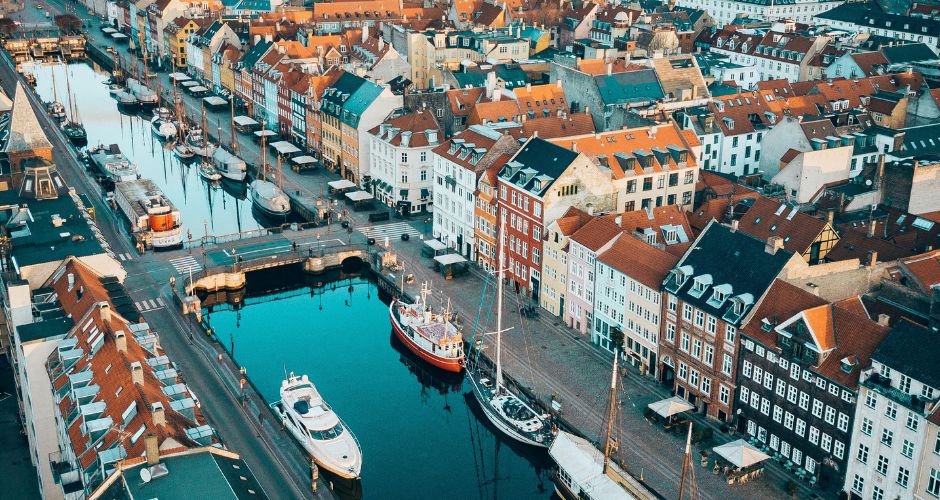
The first bridge across Nyhavn opened in 1875 as a simple wooden footbridge. The current Nyhavnsbroen (the Nyhavn Bridge) replaced it in 1912, and despite being more than 100 years old, it can still open to let larger boats in and out of the canal.
Today, Nyhavnsbroen is a busy crossing point for pedestrians and cyclists, but it’s also a great spot for that classic Nyhavn photo. From the bridge, you can look straight down the canal at the colorful houses and historic wooden boats lining the water.
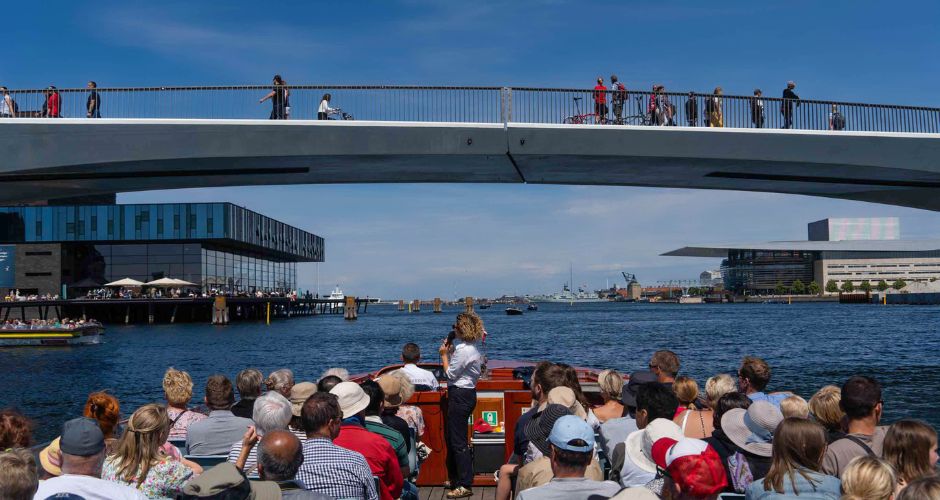
Inderhavnsbroen (the Inner Harbor Bridge) connects Nyhavn with Christianshavn and Holmen, making it easy to continue exploring Copenhagen’s waterfront on foot or by bike. The bridge is affectionately known as the Kissing Bridge. The nickname doesn’t come from people kissing on it, though some might, but from its unusual design. When the bridge opens to let larger boats pass through, two steel sections slide apart and come back together again as if sharing a kiss.
The bridge opened in 2016, and around 16,000 cyclists cross it every day, making it one of the busiest bridges in Copenhagen.
Cross from Nyhavn, and you’ll find Broens Gadekøkken right on the other side, where you can stop for street food and enjoy views of the harbor. During winter, the area is also home to Broens Ice Rink, so you can even add a little ice skating to your walk.
There has been a bridge between Copenhagen and Christianshavn since the early 1600s. The name Knippelsbro can be traced back to bridge keeper Hans Knip, whose house by the bridge became known as Knippes Hus. By the 1700s, his name had become associated with the bridge itself.
The current version of Knippelsbro you see today opened in 1937 and was designed by Danish architect Kaj Gottlob. It’s easy to recognize by its two green copper towers, which originally housed the bridge staff and machinery used to operate the bridge. Today, the towers are unmanned, and the bridge is operated remotely.
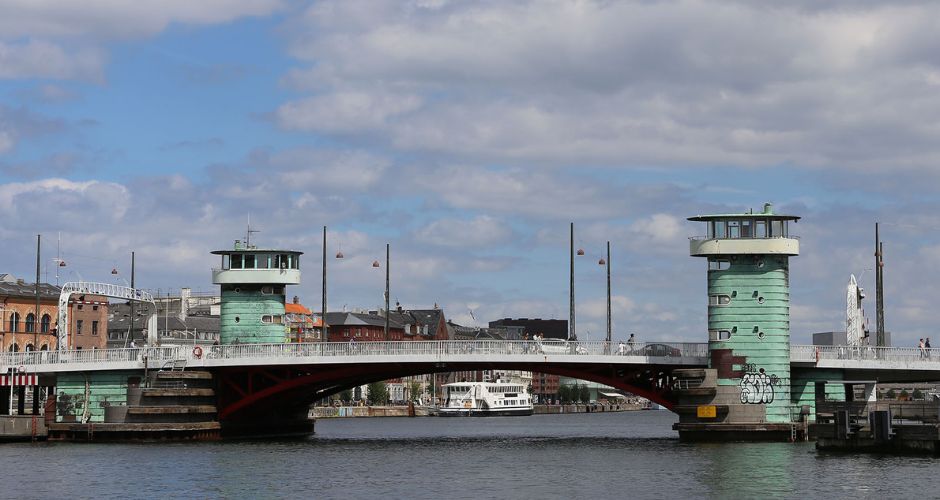
Photo by: Sandra Gonon
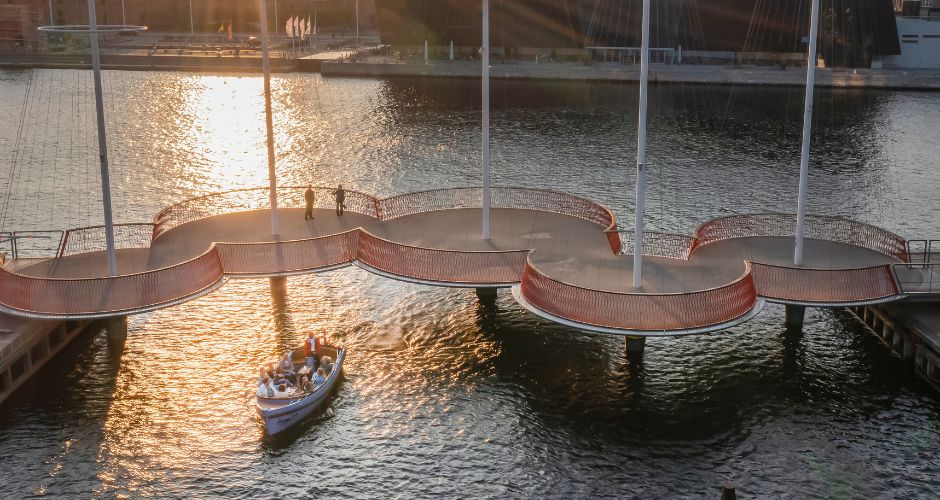
This might be the coolest bridge in the city, and since it was designed by Danish-Icelandic artist Olafur Eliasson, that’s perhaps no surprise! Cirkelbroen (the Circle Bridge) is around 40 meters long and consists of five circular platforms of different sizes. As a nod to Copenhagen’s maritime history, each platform has a mast, making the bridge look a little like a group of ships docked along the quay.
Around 5,000 pedestrians and cyclists cross the bridge every day, but Cirkelbroen was designed to be more than just a way to get from one side to the other. Olafur Eliasson wanted the unusual design to encourage people to slow down, take a break from their usual route, and maybe even meet someone new along the way.
Marmorbroen (the Marble Bridge) was built between 1739 and 1745 as part of the grand entrance to King Christian VI’s first Christiansborg Palace. Despite its name, the bridge is not entirely made of marble. It has a brick core clad in sandstone, while its sidewalks were paved with marble, which gave the bridge its name.
Nicolai Eigtved designed the bridge as part of the impressive entrance to the palace. The straight bridge leads across Frederiksholm Canal to the two pavilions at Christiansborg Palace, which were also designed by Eigtved.
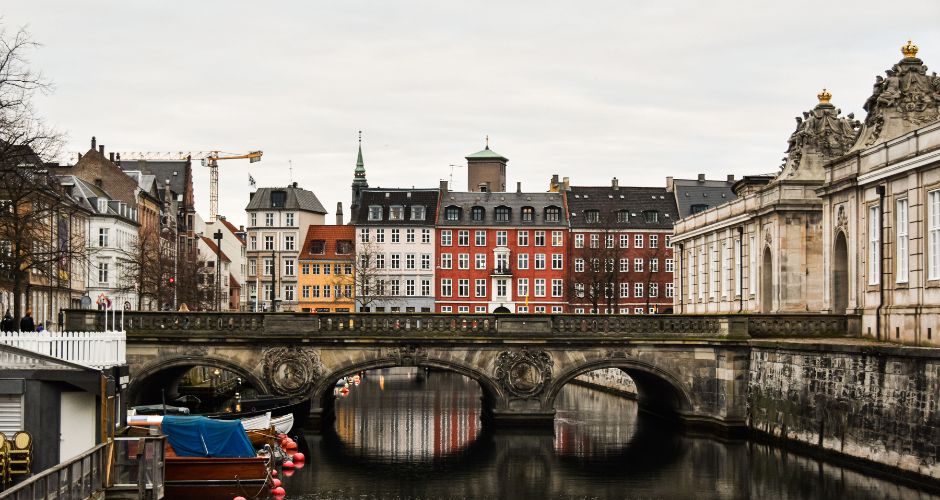
This small bridge gets its name from the Swedish assault on Copenhagen on February 11, 1659. The Danes successfully defended the city, while around 2,000 Swedish soldiers lost their lives near the ramparts by what is now Stormgade.
Stormbroen (the Storm Bridge) crosses the point where Frederiksholm Canal meets Slotsholmen Canal, connecting Vindebrogade and Stormgade. Exactly when the bridge was built is uncertain. Many sources date it to 1681, while an inscription on its stone foundation reads MDCLX, the Roman numerals for 1660.
What we do know is that the bridge underwent a major renovation in 1918 under Danish architect Martin Nyrop. Its three stone arches were designed to keep the restored bridge as close to the original architecture as possible.
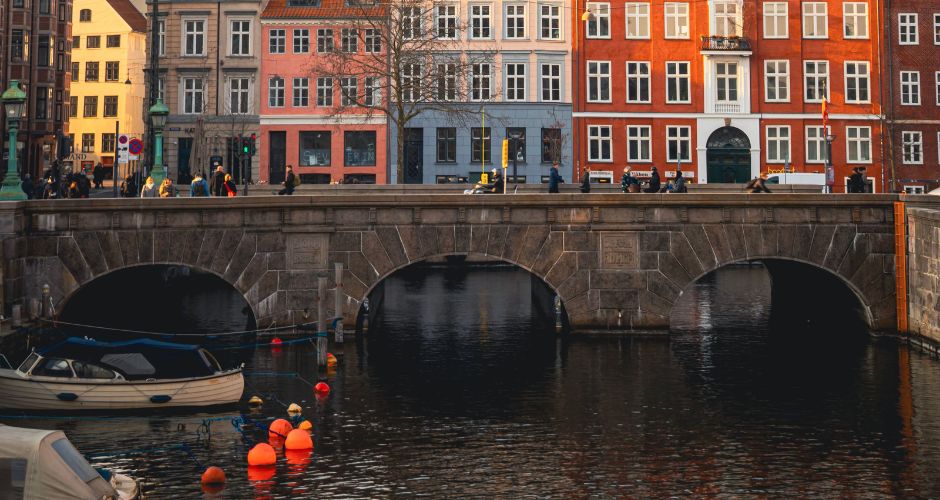
Since the Middle Ages, the island of Slotsholmen has been connected by bridge to what is now Copenhagen’s city center. The current Højbro was built in 1878 and designed by Danish architect Vilhelm Dahlerup.
The arched steel bridge rests on granite piers and reflects the architectural style of the late 19th century. Today, it remains a busy connection between Slotsholmen and the city center.
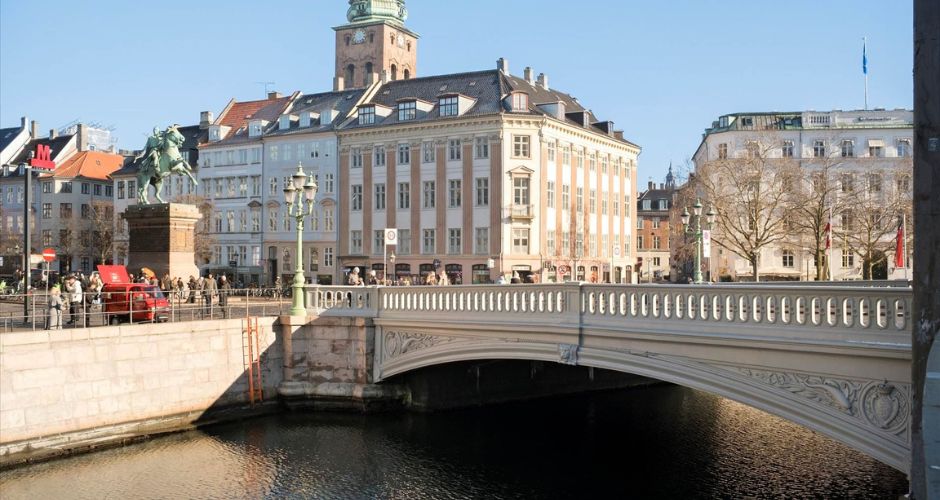
Look into the water below Højbro on the city center side, and you’ll find Suste Bonnén’s bronze sculpture Agnete & the Merman. The sculpture is based on the Danish folk tale about Agnete, a human woman who falls in love with a merman and follows him underwater. They marry and have seven sons together.
Eventually, Agnete begins to miss life on land. She is allowed to return for a single day to visit her family and friends but never comes back. Today, the merman and their seven sons remain beneath the surface, looking up and waiting for her return.

Find all the bridges mentioned in this guide on the map below and use it to plan your route through the city.

There are plenty of things to do in the city, from iconic sights to hidden gems. Explore our top picks on what to see and do while you're here.

Read more about the most iconic tourist attractions and must-visit landmarks in Copenhagen.
© 2026 Stromma Denmark A/S | Toldbodgade 39, DK-1253 Copenhagen K | Stromma Denmark is part of Stromma Group